Every era of technology has one innovation that defines it. For the 2010s, it was the smartphone. For the early 2020s, it was generative AI. In 2026, a strong contender for that title is quantum computing — a field that has quietly gone from academic theory to one of the most-discussed innovations of the year, with search interest in "quantum computing advances" and "what is a quantum computer" both spiking sharply.
This piece unpacks what quantum computing is, how it's different from the computers we already rely on, and why so many industries are treating it as the next major wave of innovation.
What Is Quantum Computing?
Quantum computing is a type of computing that uses the principles of quantum mechanics — the physics that governs particles at the smallest scales — to process information in fundamentally new ways.
A regular computer stores and processes information as bits, each one either a 0 or a 1. A quantum computer uses qubits, which thanks to a quantum property called superposition can represent 0, 1, or a combination of both at the same time. Combined with another property called entanglement, which links qubits together so the state of one instantly affects another, quantum computers can explore a huge number of possible solutions simultaneously rather than one at a time.
That's the core innovation: for certain types of problems, this isn't just a faster computer — it's a fundamentally different way of computing.
How Does Quantum Computing Actually Work?
You don't need a physics degree to grasp the basics:
Qubits replace bits. Instead of binary 0s and 1s, quantum computers manipulate qubits that can hold multiple states at once.
Superposition creates parallelism. A handful of qubits in superposition can represent an enormous number of combinations simultaneously, which is what gives quantum computers their potential speed advantage on specific problems.
Entanglement links qubits together. Changing one entangled qubit instantly affects its partner, allowing coordinated calculations across the system.
Measurement collapses the state. When you "read" the result, the qubits settle into a definite answer — the trick of quantum algorithms is designing the process so the correct answer is the most likely one to appear.
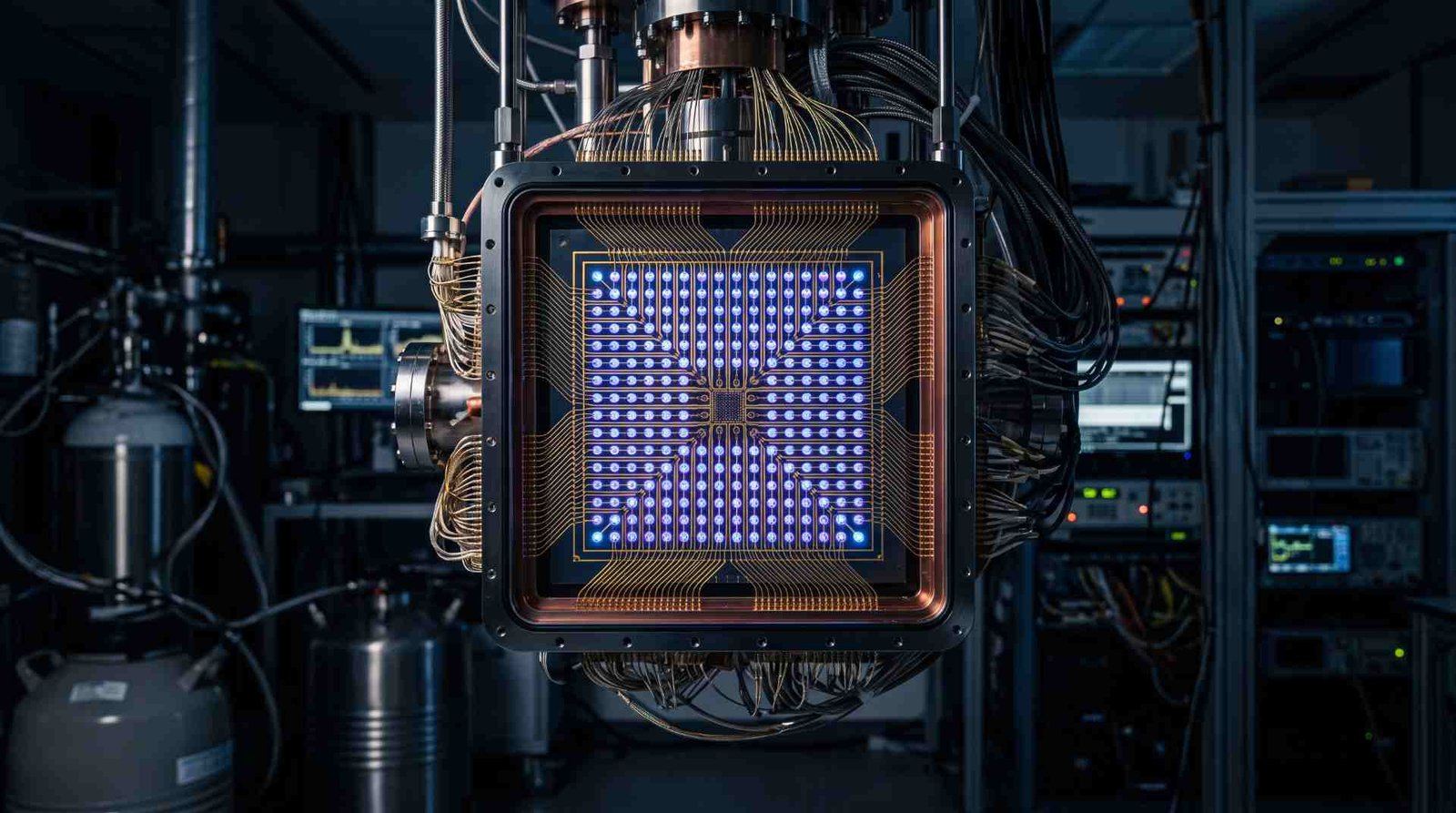
Because qubits are extremely sensitive to their environment — vibration, temperature, even stray electromagnetic noise — most quantum computers today run in isolated, supercooled environments and still require years of engineering refinement before they're broadly reliable.
Why Is Quantum Computing Considered the Next Big Innovation?
A few real breakthroughs have pushed quantum computing from "someday" to "soon":
Error correction progress. One of the biggest obstacles has always been that qubits are fragile and error-prone. Recent advances in error-correcting codes are making quantum systems meaningfully more stable and reliable.
More qubits, better connectivity. Leading labs and companies have steadily scaled up the number of usable qubits, while also improving how well those qubits communicate with each other.
Real commercial pilots. Instead of purely academic demonstrations, sectors like pharmaceuticals, logistics, and finance are running early pilots to see where quantum computing offers a genuine edge over classical computers.
Growing investment. Governments and major technology companies have poured sustained funding into quantum research, treating it as a strategic innovation priority similar to how AI was treated a few years earlier.
Where Quantum Computing Innovation Is Already Making an Impact
Quantum computing applications are still emerging, but several areas are furthest along:
Drug discovery and materials science — simulating molecules and chemical reactions with a level of precision classical computers struggle to match, potentially shortening the path to new medicines and materials.
Financial modeling — optimizing portfolios, pricing complex derivatives, and running risk simulations that involve enormous numbers of variables.
Logistics and supply chains — solving complex optimization problems, like the most efficient routing across thousands of variables, faster than traditional methods.
Cybersecurity — driving urgent innovation in "post-quantum cryptography," since powerful enough quantum computers could theoretically break some of today's encryption standards.
Climate and energy modeling — simulating physical and chemical systems relevant to battery design and clean energy research.
Is Quantum Computing Really the Future?
This is one of the most-asked questions about the field, and the honest answer is: for the right problems, yes — but it won't replace your laptop.
Quantum computers aren't designed to be faster at everyday tasks like browsing, spreadsheets, or word processing — classical computers already do that extremely well. Their real innovation lies in a specific category of problems: massive optimization, simulation of quantum systems (like molecules), and certain types of cryptography and search. For those problems, quantum computing offers a path to solutions that would take classical supercomputers years, or would be effectively impossible.
Most experts see the near-term future as hybrid: classical computers handling everyday workloads, with quantum systems called in for the small subset of problems where they offer a genuine advantage.
What This Innovation Means for Businesses and Everyday People
You probably won't own a quantum computer, and you don't need to understand the physics to benefit from it. What matters is being aware of where this innovation is headed:
If you work in pharma, finance, logistics, or materials, quantum computing may become a competitive differentiator within this decade — worth watching even if you're not adopting it yet.
If you work in cybersecurity or IT, post-quantum encryption standards are already being rolled out, and staying current on them is becoming a practical necessity, not a future concern.
If you're simply curious about innovation, quantum computing is a useful reminder that not every breakthrough looks like an app — some of the biggest ones happen at the level of physics and infrastructure, and take years to reach the public in visible ways.
Frequently Asked Questions
What is quantum computing, in simple terms? It's a way of computing that uses quantum physics — specifically qubits that can represent multiple states at once — to solve certain complex problems far more efficiently than traditional computers.
How is a quantum computer different from a regular computer? A regular computer uses bits that are strictly 0 or 1. A quantum computer uses qubits, which can exist in a combination of states at once, allowing it to process certain calculations in parallel rather than one at a time.
Is quantum computing the future? It's shaping up to be a major innovation for specific, high-value problems — simulation, optimization, and cryptography — rather than a full replacement for the computers we use daily.
Can quantum computers break encryption? A sufficiently advanced quantum computer could theoretically break some widely used encryption methods, which is why "post-quantum cryptography" has become an active area of innovation in its own right.
When will quantum computing be mainstream? Meaningful commercial use is already happening in research and pilot form. Broad, everyday mainstream impact is still expected to unfold gradually over the coming years as hardware and error correction continue to mature.
The Bottom Line
Quantum computing represents exactly the kind of innovation that reshapes industries slowly and then suddenly — years of incremental physics and engineering progress, followed by a rapid wave of practical applications once the technology crosses a reliability threshold. In 2026, we're watching that threshold get closer. Whether or not you work directly with the technology, understanding what quantum computing is and where it's headed is quickly becoming part of being informed about where innovation is taking us next.
Focus Keyword: quantum computing
Secondary Keywords: what is quantum computing, quantum computing advances, quantum computer, is quantum computing the future, quantum computing applications, innovation
Category: Innovation
Tags: Quantum Computing, Innovation, Emerging Technology, Future Tech, Science